


Quick Answer
A seller cannot delete an Amazon review. Only Amazon can, and only when the review breaks its guidelines. Your real options are to report it, reply to it publicly, or fix what it describes. Amazon lists 5 categories of review that are not allowed, and “off topic” is the one that gets most removals.
- Reportable: per the community guidelines, reviews that only discuss the seller, ordering and returns, shipping packaging, product condition and damage, or shipping cost and speed.
- Not reportable: a genuine buyer who disliked the product. That one stands, however unfair it feels.
- Never do this: ask the buyer to change or remove it, offer a refund for it, or organize downvotes. All three can cost you the account.
- Product reviews do not affect your Order Defect Rate. ODR counts seller feedback, A-to-z claims, and chargebacks, and only on seller-fulfilled orders.
Your Amazon listing’s product text might be superb, and your product images might be the best. Nonetheless, your potential clients need some proof that your goods work at the end of the day. And there is no better way to learn than reading reviews from past clients who have purchased your item, right?
A bad review stings, and the first instinct is to get rid of it. Worth knowing before you spend a day on it: how to remove Amazon reviews is really a question about what Amazon will do, not what you can do. You cannot delete a buyer’s review. You can report it, and Amazon decides.
About the Author: Gloria Anderson writes for the SellerSonar editorial team on reviews, ratings, and listing health. She has read more Amazon policy pages than is healthy, which is the only reliable way to tell a review you can get removed from one you are stuck with.
Why Do Product Reviews Matter?
Some merchants may think that feedback management is just a tiny part of the larger process of an AMZ store, one that’s not worth investing time, money, and energy on.
However, when you’re stressing about negative feedback and feeling helpless, you may start feeling totally different.
Amazon puts it plainly in its own community guidelines: “Reviews are a key part of Amazon’s shopping experience, helping millions of customers make informed purchasing decisions.”
Which cuts both ways. The same system that sells your product for you is the one you cannot edit.
Without any doubt, if your Amazon listings are filled with negative comments, it will damage your brand’s reputation and directly influence the sales of your items.

How Negative Is a Negative Review?
Bad enough to matter, though the damage is mostly to conversion rather than to your account. A listing sitting at 3.2 stars converts worse than the same listing at 4.3, and that gap compounds every day it stays.
How can negative reviews influence sales?
Getting more customer trust is directly proportional to growth in positive feedback. It is also how the platform establishes its most reliable and trustworthy merchants within a particular category and rewards them with its Buy Box.
Whoever gets the Buy Box will have their goods marketed to clients over other merchants with similar or the same products. The marketplace considers a couple of factors when determining who to grant the Buy Box, including their fulfillment method, product price, and, what is more important, average seller rating.
How can negative reviews influence seller accounts?
Here is a distinction worth getting right, because plenty of guides blur it. Product reviews do not feed your Order Defect Rate. Per Amazon’s ODR page, the three things that do are negative seller feedback (1 and 2-star seller reviews), A-to-z Guarantee claims, and credit card chargebacks, measured over 60 days. Amazon also states flatly that “ODR only applies to seller-fulfilled orders”.
The threshold is real. Amazon requires sellers to keep ODR under 1% to sell in its store. But the consequence is narrower than the usual scare story: breaching it “may result in suspension of your Fulfilled by Merchant selling privileges or deactivation of your seller-fulfilled offers”, not automatic loss of the whole account.
So a one-star product review hurts your conversion rate. It does not, by itself, put your account at risk.
So, can you delete Amazon reviews? Not yourself. Here is what actually works.
How to Remove Bad Reviews on Amazon: Simple Steps
Four steps, in the order worth doing them. The first two are free, and the fourth is the one that actually changes anything.
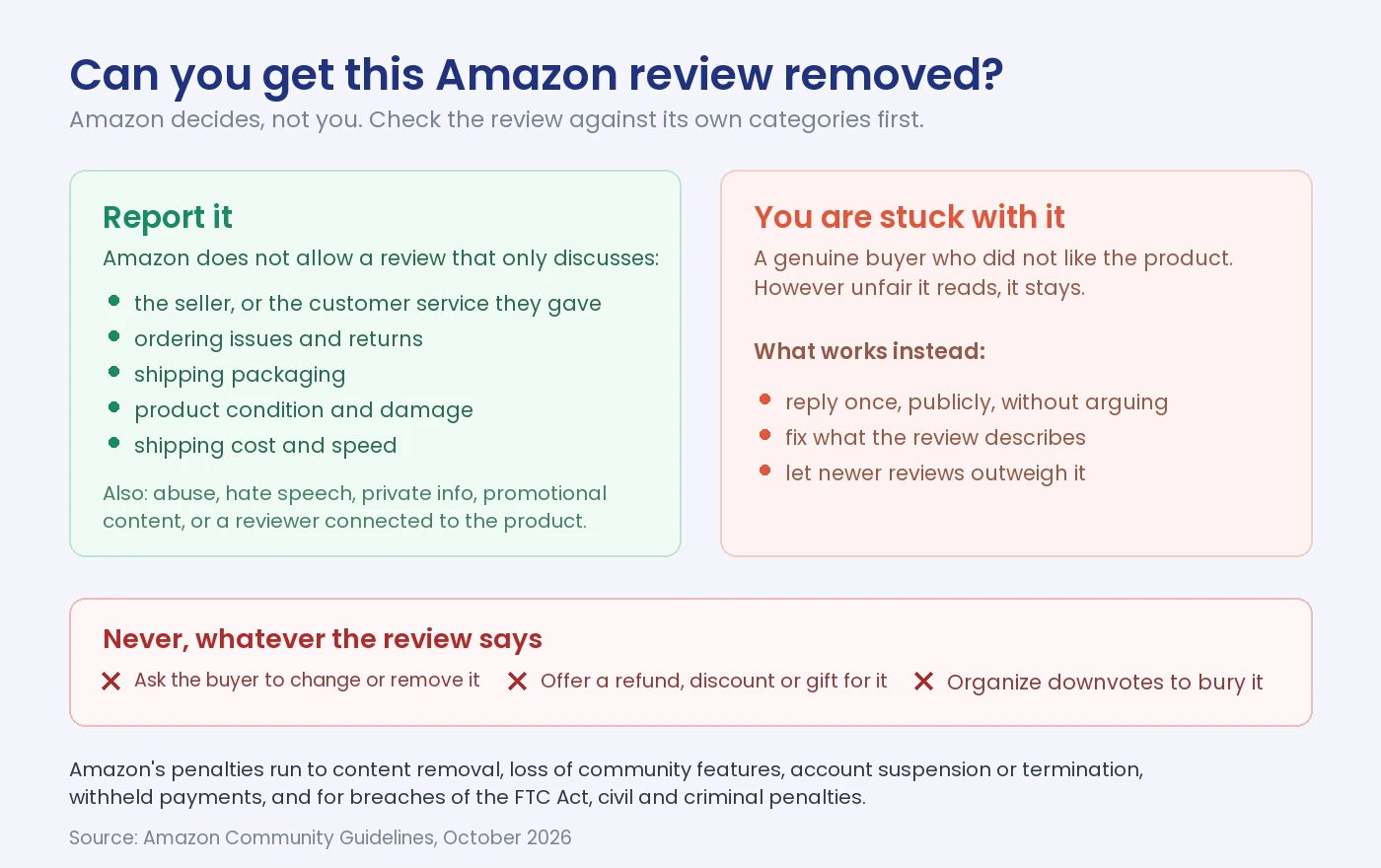
Checked against Amazon’s community guidelines, October 2026.
Step 1: Look carefully at the feedback
Don’t panic when you see a new 1-star review. Instead, take a deep breath and read this review carefully. Then, think about the following three questions:
- Is this a review from your competitor or an actual customer?
- What makes a customer dissatisfied?
- Did the client write the review against Amazon rules?
That third question is the one that decides everything else. If the answer is no, steps 2 and 3 will not help you, and step 4 is the only one left.
SellerSonar sends review alerts with rating history and review tracking, so a new one-star arrives in your inbox rather than being discovered a fortnight later.
Step 2: Contact Amazon Support
If the review is off topic or abusive, report it. Amazon gives you two routes. On the product page, use the Report link under the review itself. For a suspected competitor attack, go to Seller Central, open the Help icon or your Account Health Dashboard, choose Report Abuse, and pick the violation type.
Suspected competitor reviews rarely come down without evidence, so set your expectations accordingly.
⚠️ What you must not do is contact the buyer about the review. Amazon’s guidelines forbid customers from “creating, editing, or removing a review in exchange for compensation, including payments, refunds, discounts, products, gift cards, warranties, or services”, and state that this “applies even if a seller offers a refund to remove or change a negative review”. Messaging a buyer to fix a genuine product or delivery problem is fine. Messaging them about the review is the part that gets accounts suspended.
Step 3: Respond to feedback.
Sometimes a customer simply does not understand how to correctly use an item (even with enclosed carefully crafted instructions). Generally, prospective clients discern that it is a limitation of the reviewer versus the goods themselves. As the merchant, taking time to reply in a professional, non-defensive, and friendly manner on the detail page for other shoppers to see counterbalances such as negative reviews creates confidence in your brand and product. In many cases, answering customer questions results in a client changing their review independently.
Step 4: Fix the thing the review describes
This page used to recommend asking customers to downvote a bad review so it would sink. We have taken that out, and it is worth saying why: Amazon’s guidelines list “drowning out opinions” and coordinating with others among the things that are not allowed, and the penalties run to account suspension. It is not a grey area that works; it is a risk you carry alone.
The method that does work is slower. A review that names a real fault stops mattering when the fault is gone and newer reviews say so. Fix the packaging, rewrite the instruction sheet, change the supplier. The old review stays, and it stops being representative.
How to Delete Amazon Reviews: Do and Don’t
DO Request removal by AMZ if customer feedback violates community guidelines.
Amazon publishes the categories it does not allow in a product review, and this list is the one to check a review against before you report it. Reviews that only focus on:
- the seller and the customer service they provide;
- ordering issues and returns;
- shipping packaging;
- product condition and damage;
- shipping cost and speed.
Amazon’s reasoning, in its own words: “Community content should help customers learn about the product itself, not individual ordering experiences.” That is the single most common legitimate removal, and it is why a one-star review that says nothing but “arrived late” is worth reporting while one that says “the handle snapped” is not.
Separately, the guidelines also bar profanity and harassment, hate speech, private information, promotional content, plagiarism, and reviews from anyone with a financial or personal connection to the product.
If a review falls into one of those categories, report it and keep the evidence. If it does not, no amount of escalating will move it.
DON’T: Use third-party software promising to delete Amazon reviews.
There are no shortcuts for dealing with negative reviews as a merchant. Your main courses of action are replying to the feedback and reporting potentially illegal reviews on goods to the platform.
Some services promise review removal at a high success rate. Most get there by contacting buyers directly, which is the thing Amazon bans outright, and the trail leads back to you rather than to them.
Amazon spells out what it can do about it: remove the content, limit your use of community features, suspend or terminate the account, and withhold payments. For breaches of state or federal law, including the FTC Act, it says it “might take legal action”, which “may result in civil and criminal penalties”.
Look Positive Side of Negative Feedback on Amazon
It’s difficult to believe that there is any positive side to getting negative reviews on AMZ. Yet, despite your effort to craft the perfect merchandise, there’s always some room for improvement. Whether you let a poor review demotivate you or consider it constructive criticism is up to you.
However good the product, someone will eventually dislike it. That is not a failure state, it is arithmetic.
And not every bad review deserves removing. Some of them are the most useful mail you will get all quarter. Three reasons to leave one alone.
It makes your AMZ store more trustworthy.
Find me a major brand with no bad reviews. You cannot, and shoppers know it.
A page of nothing but five stars reads as manipulated, and plenty of buyers now sort by critical first to check. A handful of honest two-star reviews, answered well, does more for trust than a suspiciously clean record.
It demonstrates how you may enhance your goods.
Companies pay a lot of money for that kind of product feedback. Here it arrives unprompted, from people who actually bought the thing.
Clients can see how you reply to criticism.
What matters most about a bad review is how you answer it. It can be a golden opportunity since shoppers can see how you respond to negative feedback. Thus, sellers can win their client’s sympathy by replying positively rather than fighting fire with fire. It’s a platform where merchants can show clients that they care and they will do right by the visitors.
As a merchant, you might ask how to remove negative AMZ reviews. However, you should not always strive to do that. There are also good aspects that poor feedback can bring. You should look at your glass as half full instead of half empty.
Why Track Deleted Reviews?
Watching what Amazon takes down is as useful as watching what arrives, and for a reason most sellers never consider.
For sellers who make their own products and face tough competition, it’s just as important as watching out for bad reviews. Here’s why:
Defending against cheating
Sometimes, competitors leave fake reviews on our products. By checking if Amazon removed them, we can see if they’re playing dirty. This helps us protect our brand’s reputation and keep things fair. Plus, it allows us to keep track of the platform’s deleted negative comments on our products, ensuring a level playing field.
Understanding Amazon’s rules
When reviews get deleted, it helps us understand what Amazon allows and doesn’t allow. This helps us guide customers to write testimonials that won’t be taken down. We can also challenge Amazon if they remove a fair review by mistake.
Watching the impact on ratings
Deleted reviews affect how well our products are rated and sold. Tools like SellerSonar help us see if there’s any harm and fix it fast. Getting alerts for bad reviews as soon as they pop up lets us address problems right away, stopping customers from getting the wrong idea. Plus, keeping track of how deleted comments affect sales helps us understand what customers like and don’t like.
How SellerSonar Helps You Watch Reviews
You cannot stop a bad review arriving. You can know about it the same day, which is the difference between replying while it sits near the top of the page and finding it a fortnight later.
SellerSonar is a listing monitoring tool, and reviews are one of the things it watches.
Once you add your Products or Stores, all your testimonials will be stored in the Reviews tab. Besides, SellerSonar’s review tracker allows you to sort your reviews by product, marketplace, brand, store, gender, and rating, as well as include only testimonials with images, top, or deleted reviews.

If you sort reviews by one product, you will get a historical chart of reviews for it and top phrases. You will see which phrases customers use most frequently in their comments, giving you valuable insights into what they love about your product and what areas may need improvement.
Moreover, to never miss a bit, you can set up timely alerts with SellerSonar for both positive and critical reviews, as well as one-tap reviews.
Alerts land in the Alerts tab. Filter by type. Click one and you get the detail behind it, including one-tap reviews split by star rating.
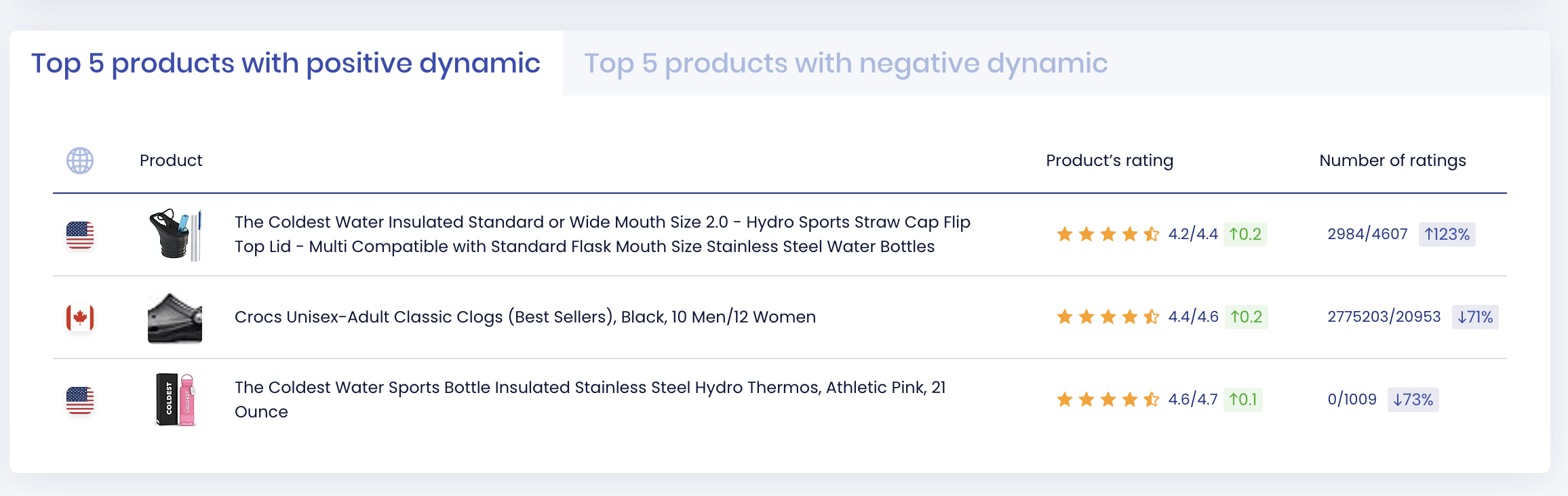
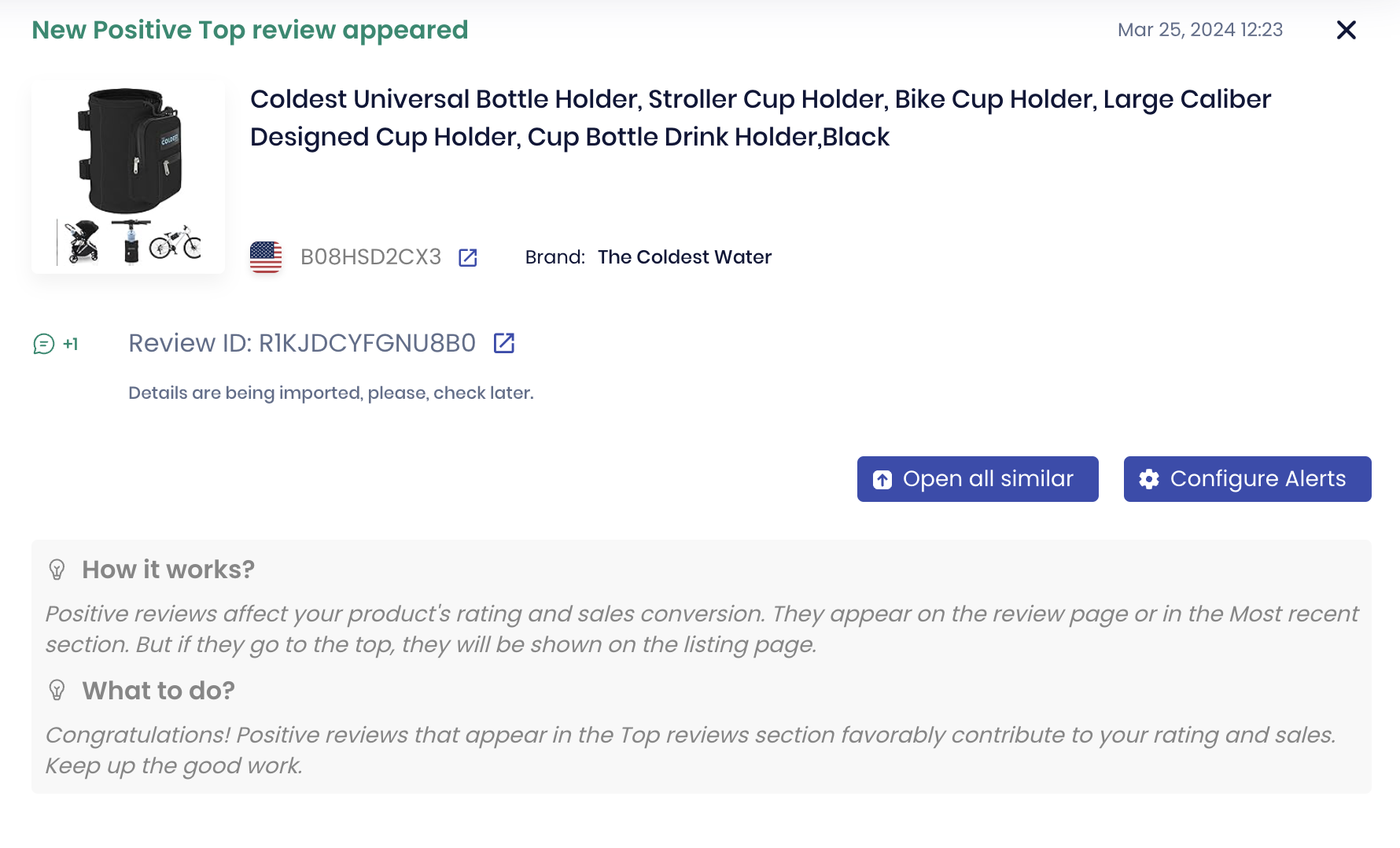 Deleted reviews show up on the Dashboard too. Pick a time frame, then hover over “Number of ratings” in the Top 5 products section to see how many came off.
Exports matter more than they sound, at least for agencies. Filter the reviews down to what you need and pull a report of up to 100,000, or export the review and rating alerts with ASIN, marketplace and alert type attached.
Useful when somebody asks what happened in Q3.
This is just a taste of what SellerSonar has to offer. To explore the features firsthand, feel free to check out our demo or schedule a live meeting with our expert.
Amazon Bad Reviews: One Last Word of Advice
Bad reviews are part of the job. The ones you can actually get removed are a narrow category, and knowing which is which saves you the week most sellers waste escalating something that was never going anywhere.
Report what qualifies. Answer what does not. Then fix what the review describes, because that is the only move that changes the next hundred reviews rather than arguing about the last one.
And watch for them. A one-star you answer the same day reads as a brand paying attention; the same reply three weeks later reads as damage control.
Know the same day a review lands, changes, or disappears. Start a 14-day trial, no card required.