





Quick Answer
An Amazon keyword rank tracker records where your ASIN sits in search results for the keywords you care about, and tells you when that position moves.
- Cheapest way in: AMZScout, about $33/mo on the annual plan, with a no-card trial.
- Best if you also want research: Helium 10 or Jungle Scout, though both cost considerably more.
- Best if rank is one of several things you watch: SellerSonar, from $19.98/mo, which tracks rank alongside hijackers, Buy Box and listing changes.
- Tracking frequency matters more than keyword count. A daily snapshot of 500 keywords beats a weekly one of 5,000.
About the Author: Alex Harrison writes for the SellerSonar editorial team on Amazon search, monitoring and seller tooling. He tests these tools against the everyday question sellers actually have, which is not “what is my rank” but “what changed, and when”.
Keyword rank on Amazon is not a vanity metric. It’s the difference between showing up on page one for a term buyers actually use and sitting on page four where nobody scrolls.
The problem is that rank moves constantly and Amazon keeps no history. Check today, you get today. Miss the week your main keyword slid from four to nineteen and you’ll never see the drop, only the sales figure that followed.
That’s what a rank tracker is for. Below are seven tools that do it, what each one costs, and which is worth paying for depending on what you’re actually trying to solve.
What separates a good rank tracker from a bad one
Four things, roughly in order of how much they matter.
How often it checks. Daily is the useful baseline. Weekly checks miss the movement that matters, and a tracker that samples too rarely is just an expensive screenshot.
How many keywords you get. Most sellers need dozens per ASIN, not thousands. Plans that headline enormous keyword ceilings are usually selling you a number you’ll never reach.
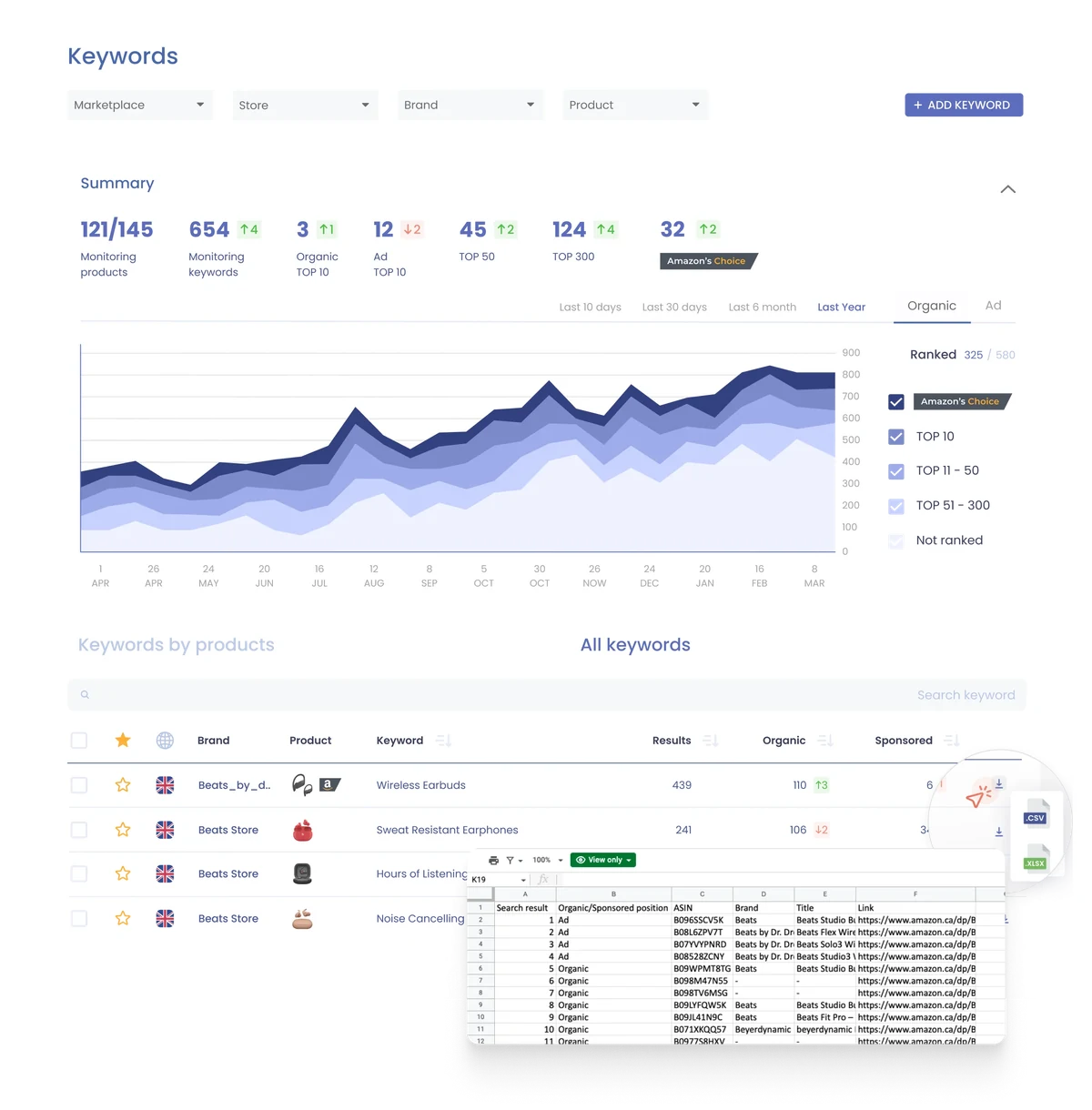
Whether it separates organic from sponsored. If it doesn’t, your paid placement can quietly mask an organic slide for weeks, and you’ll only find out when you pause the campaign.
Whether it tells you when something changes. Most tools skip this. Recording rank and telling you rank moved are different features, and a dashboard only helps on the days you remember to open it.
The seven tools compared
| Tool | Entry price | Free option | Type | Best for |
|---|---|---|---|---|
| AMZScout | ~$33/mo annual ($59.99 monthly) | No-card trial, limited searches | Research toolset | Cheapest entry, research plus rank |
| SellerSonar | $19.98/mo annual | Free 14-day trial | Monitoring suite | Rank as part of wider listing monitoring |
| Jungle Scout | ~$29/mo annual ($49 monthly) | No free trial | Research suite | Product research first, rank second |
| ZonGuru | ~$29/mo annual ($49 monthly) | 7-day trial | Seller suite | Research plus listing optimisation |
| SellerApp | Freemium, paid tiers vary | Forever-free tier | Research + PPC | Sellers running ads alongside SEO |
| Helium 10 | $99/mo annual ($129 monthly) | Free tools only | All-in-one suite | Deep keyword research at scale |
| Perpetua | From ~$695/mo, quote-based | No | Ads platform with SEO insights | Brands spending heavily on Amazon Ads |
Prices are each vendor’s published rates as of September 2026, taken from their own sites, linked in the sections below. Several change often, so check before you buy.
1. AMZScout
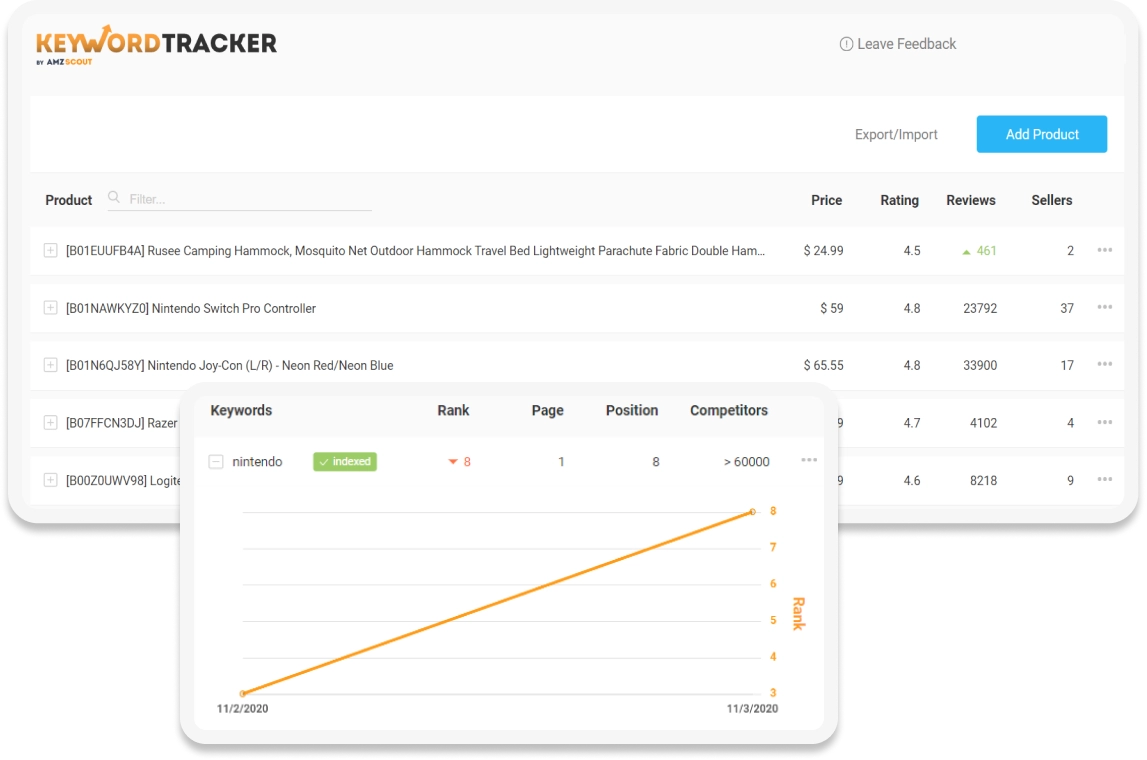
The cheapest way into rank tracking here, though what you get is a research toolset with a tracker inside it rather than a dedicated tracker. Its Keyword Tracker follows the positions your ASIN holds for the terms you feed it and tells you when one drops.
AMZScout lists the standard subscription at $59.99/mo, or $399.99 a year, which works out around $33/mo. You can test it without a card, on an open-ended trial that caps how many searches you run, and paid plans carry a 10-day money-back guarantee. Worth knowing that AMZScout runs several offer pages at different prices, so check the figure at checkout.
Pick it if budget is the binding constraint and you want product research alongside rank. Don’t pick it for listing protection: rank-drop alerts are the only alerts here, so hijackers, Buy Box loss and content edits go unwatched.
2. SellerSonar
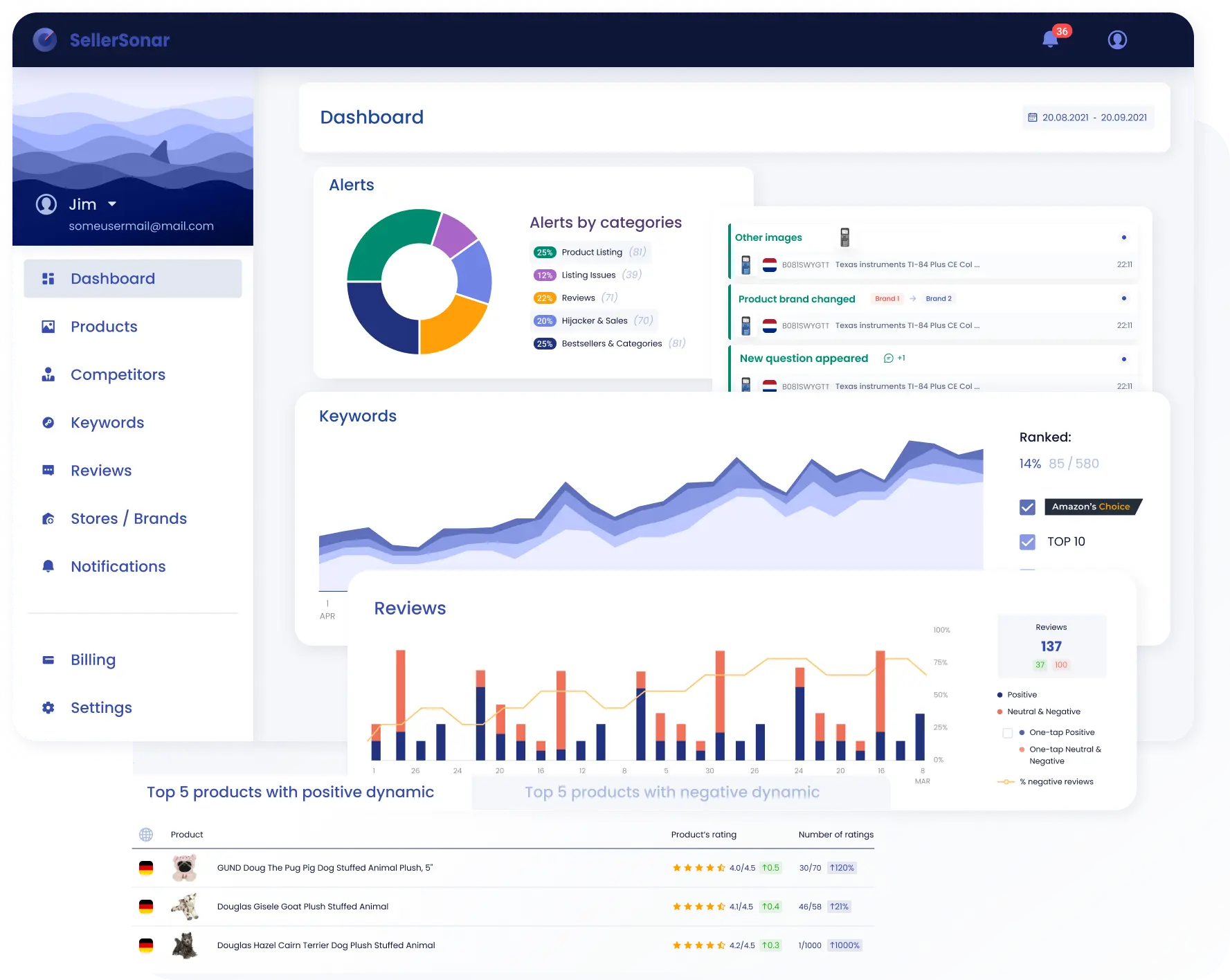
SellerSonar tracks keyword rank as one signal among several. The same account watches for hijackers, Buy Box loss, listing edits, review swings and suppression, and alerts you when any of them move.
Per SellerSonar’s plans, Pro is $19.98/mo billed annually and covers 150 ASINs and 500 keywords with alerts every four hours. Premium at $39.98 raises that to 300 ASINs and 2,000 keywords on a two-hour cadence, and Business at $74.98 covers 500 ASINs and 3,000 keywords with hourly alerts. There’s a free 14-day trial for 5 ASINs and 10 keywords, no card required.
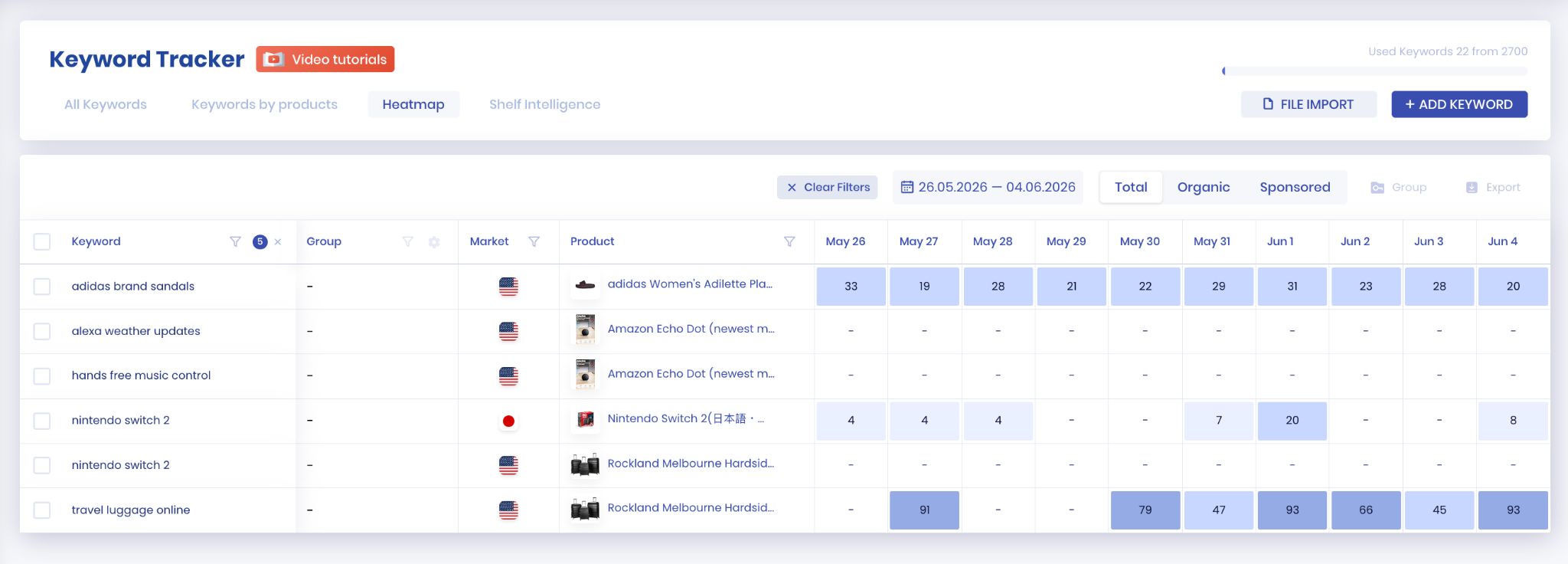
Two things here go past a plain position number. The Heatmap lays every tracked keyword against every date as a grid of colour, so a block of terms sliding together reads at a glance instead of one chart at a time, and keyword groups let you watch a launch or a whole category as a unit. Shelf Intelligence answers the question rank alone can’t: how much of the first page your brand actually holds. It reports share of voice across organic and sponsored results, and share of shelf against named competitors, which is the difference between knowing you sit at position four and knowing a rival owns six of the ten slots around you. Shelf Intelligence sits on the Business plan.
Pick it if a rank drop is one of several things you need to hear about quickly. Don’t pick it for keyword research: there’s no reverse-ASIN or search-volume database here, and Helium 10 or Jungle Scout will serve you better for finding keywords in the first place.
3. Jungle Scout
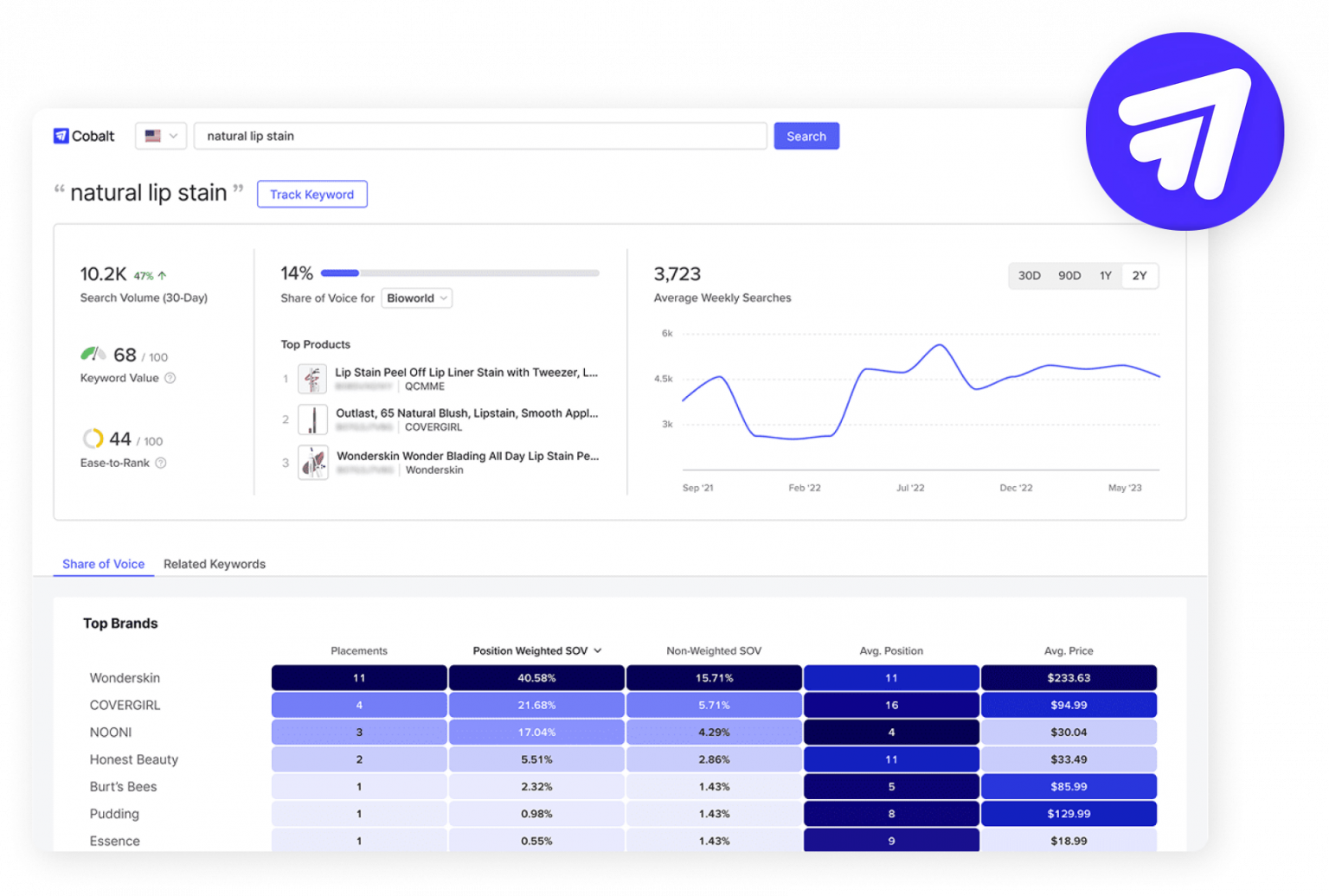
Jungle Scout built its name on product research and sales estimation, and its rank tracker is a competent part of a larger platform rather than the reason to buy it.
Per Jungle Scout’s pricing page, Starter runs about $29/mo billed annually, $49 monthly. Growth Accelerator is roughly $49/mo annual. There’s no free trial, only a 7-day money-back guarantee, which makes it harder to evaluate before committing.
Pick it if you’re researching products and validating demand, and rank tracking is a useful extra rather than the point.
4. ZonGuru
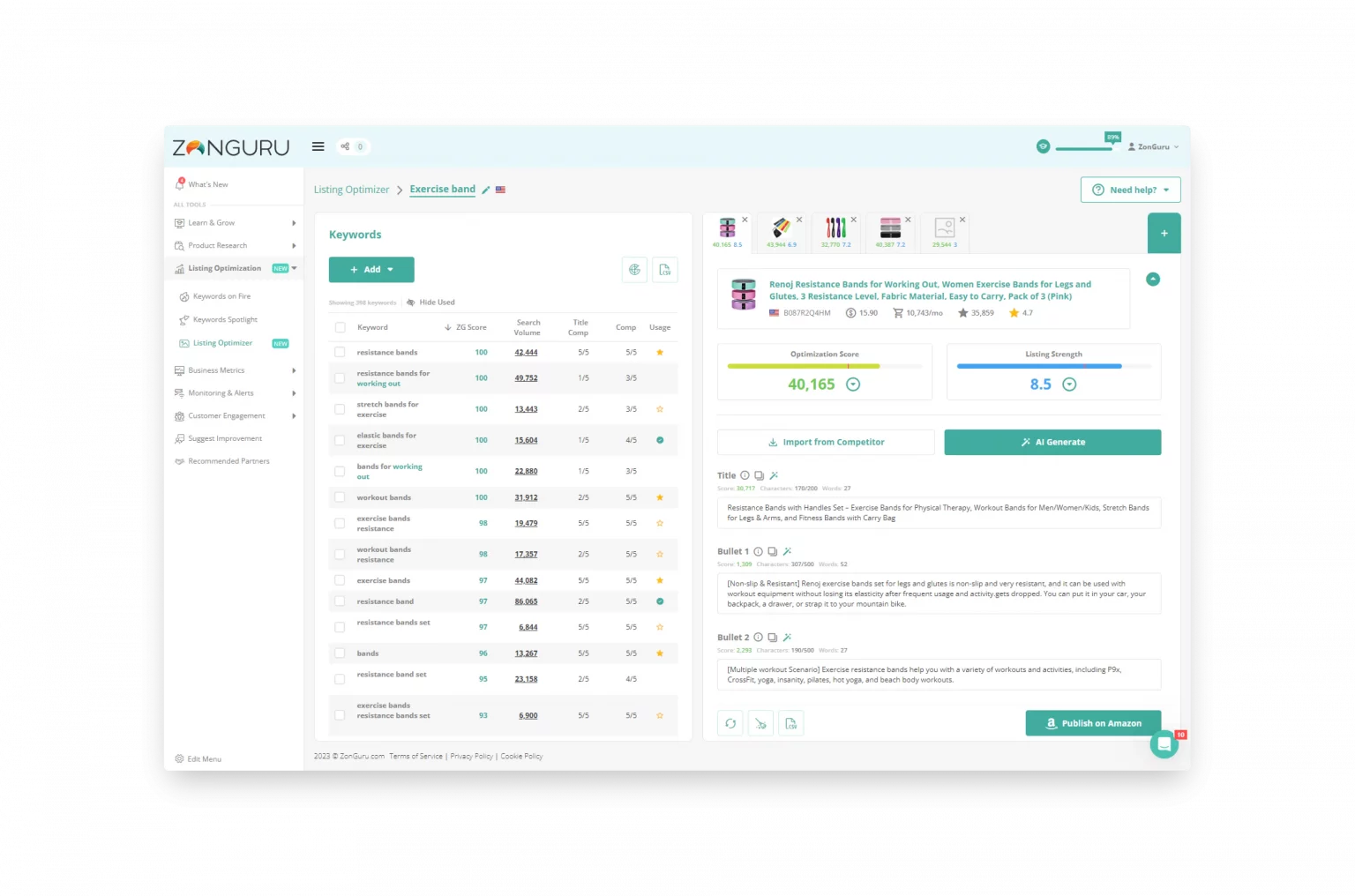
A seller suite weighted toward research and listing optimisation, with rank tracking included. Per ZonGuru’s pricing page, Researcher starts around $29/mo billed annually, and the Seller plans scale by SKU count from roughly $49 to $159/mo annual.
It offers a 7-day free trial with no free tier. Worth knowing that its alerting requires a Seller Central connection, which not every seller wants to grant.
Pick it if you want listing optimisation and research together and you’re comfortable connecting your account.
5. SellerApp
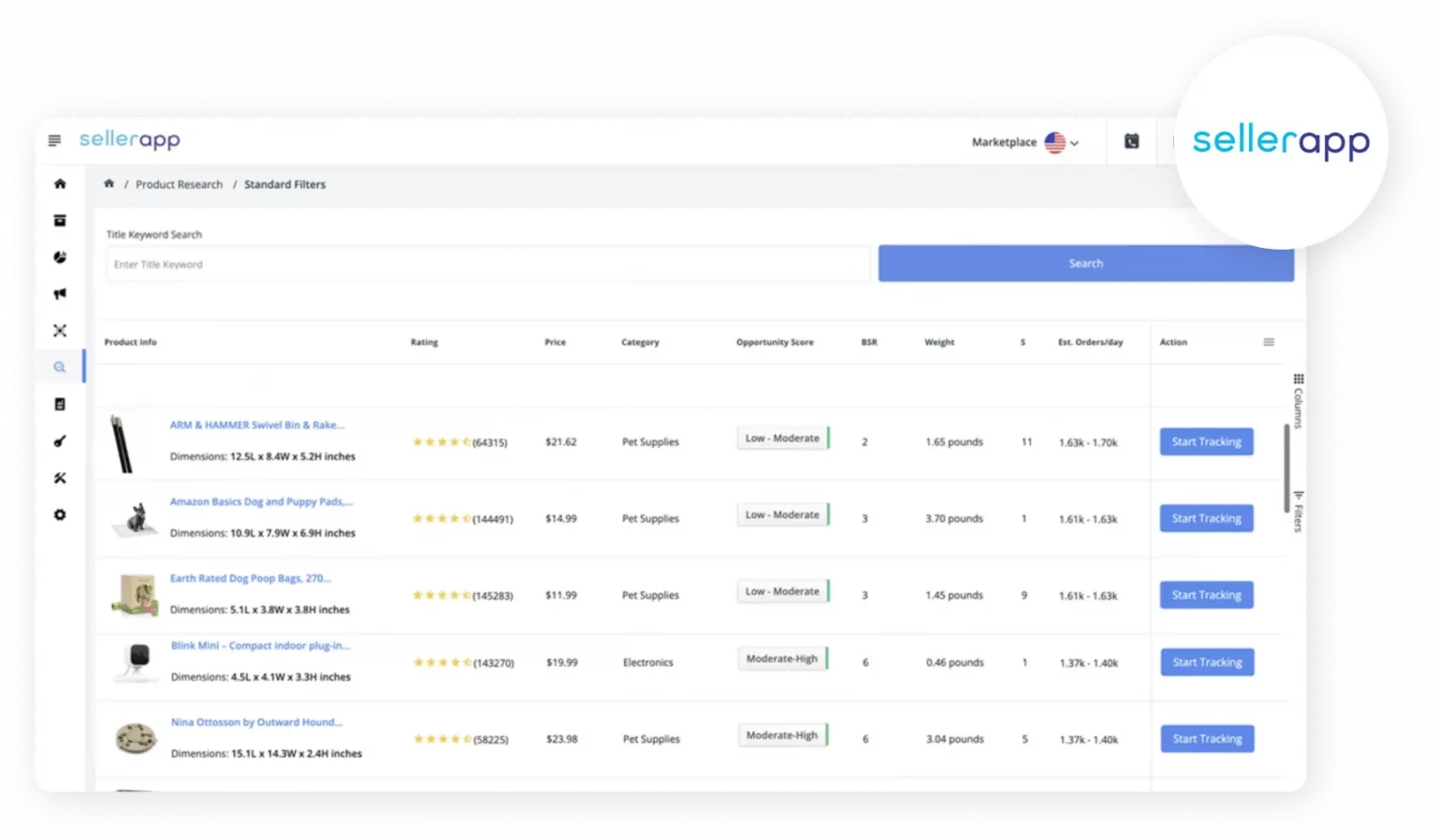
SellerApp combines research, rank tracking and PPC automation, and it’s the only tool here with a genuinely forever-free tier.
Its paid pricing is the least transparent in this list. Published figures on SellerApp’s pricing page and elsewhere vary between roughly $39 and $99/mo, higher tiers scale with ad spend, and the top plans need a sales conversation. Treat any number you see as approximate until you have a quote.
Pick it if you’re managing ads and organic rank together and want them in one place.
6. Helium 10
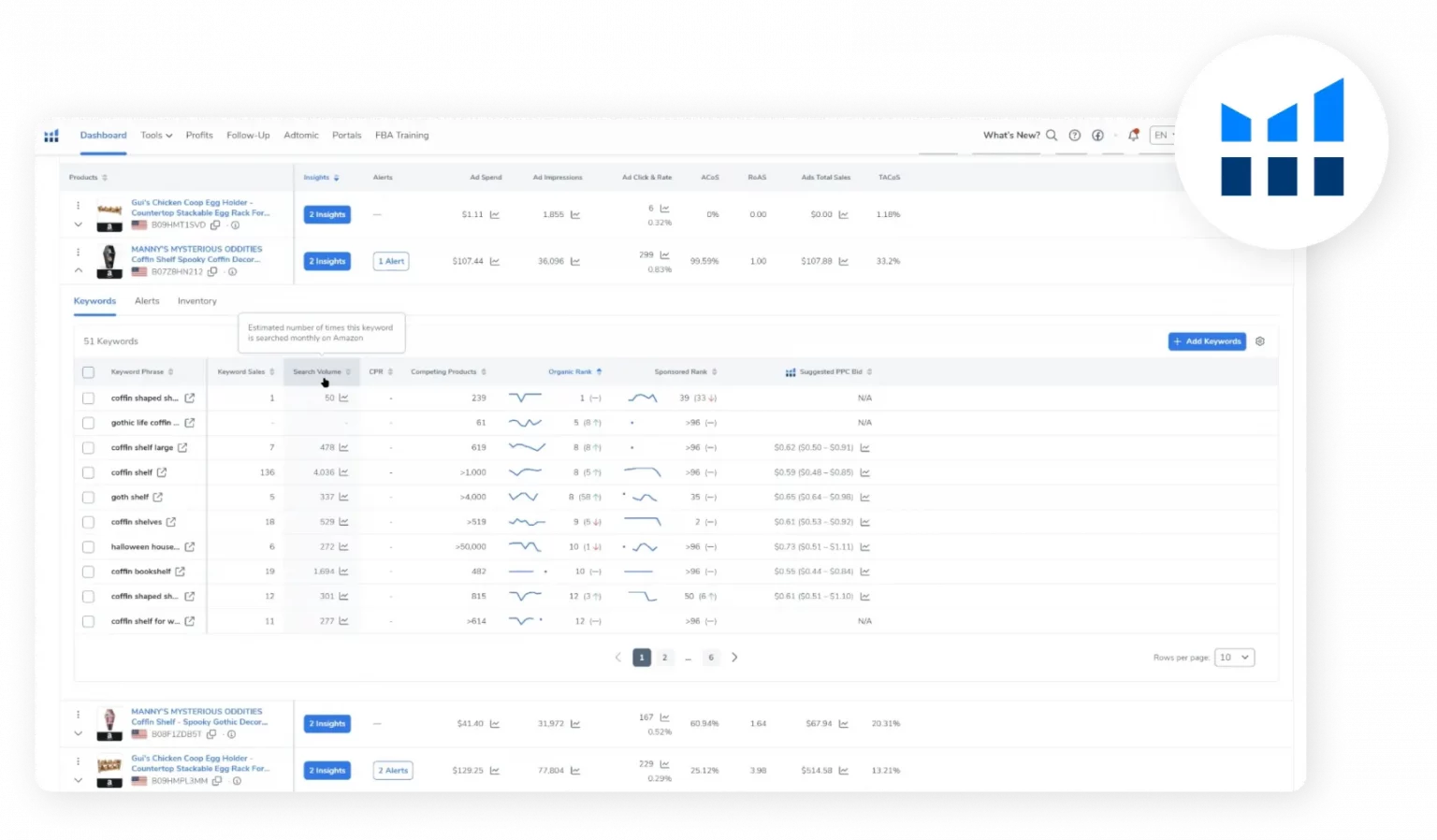
Helium 10 has the deepest keyword data of anything here. Cerebro and Magnet are genuinely best in class for reverse-ASIN lookups and keyword discovery, and its Keyword Tracker sits on top of that database.
It’s also the most expensive. The April 2026 price rise removed the old $39/mo Starter plan, so per Helium 10’s pricing page the cheapest paid entry is now Platinum at $99/mo billed annually, or $129 month to month, with Diamond at $279/$359. There’s no free plan beyond limited free tools and a restricted Chrome extension, and no free trial, only a 30-day money-back guarantee.
Pick it if keyword research depth is worth the price to you. Skip it if you only want to watch rank, because you’d be buying a research suite to use one module.
7. Perpetua
An advertising platform that absorbed Sellics in 2022 and inherited its rank tracking with it. Per Perpetua’s SEO tool page, it tracks organic rank for the top 50 ASINs on every search term, sampling through the day for a daily average, and reports brand share of voice on daily and weekly trends. That pairing is the point: you see the organic movement next to the ad spend that caused it.
Per Perpetua’s pricing page it is quote-based and scales with ad spend, starting around $695/mo at the entry tier, with no free trial. Its Sonar keyword tool is free to use on its own.
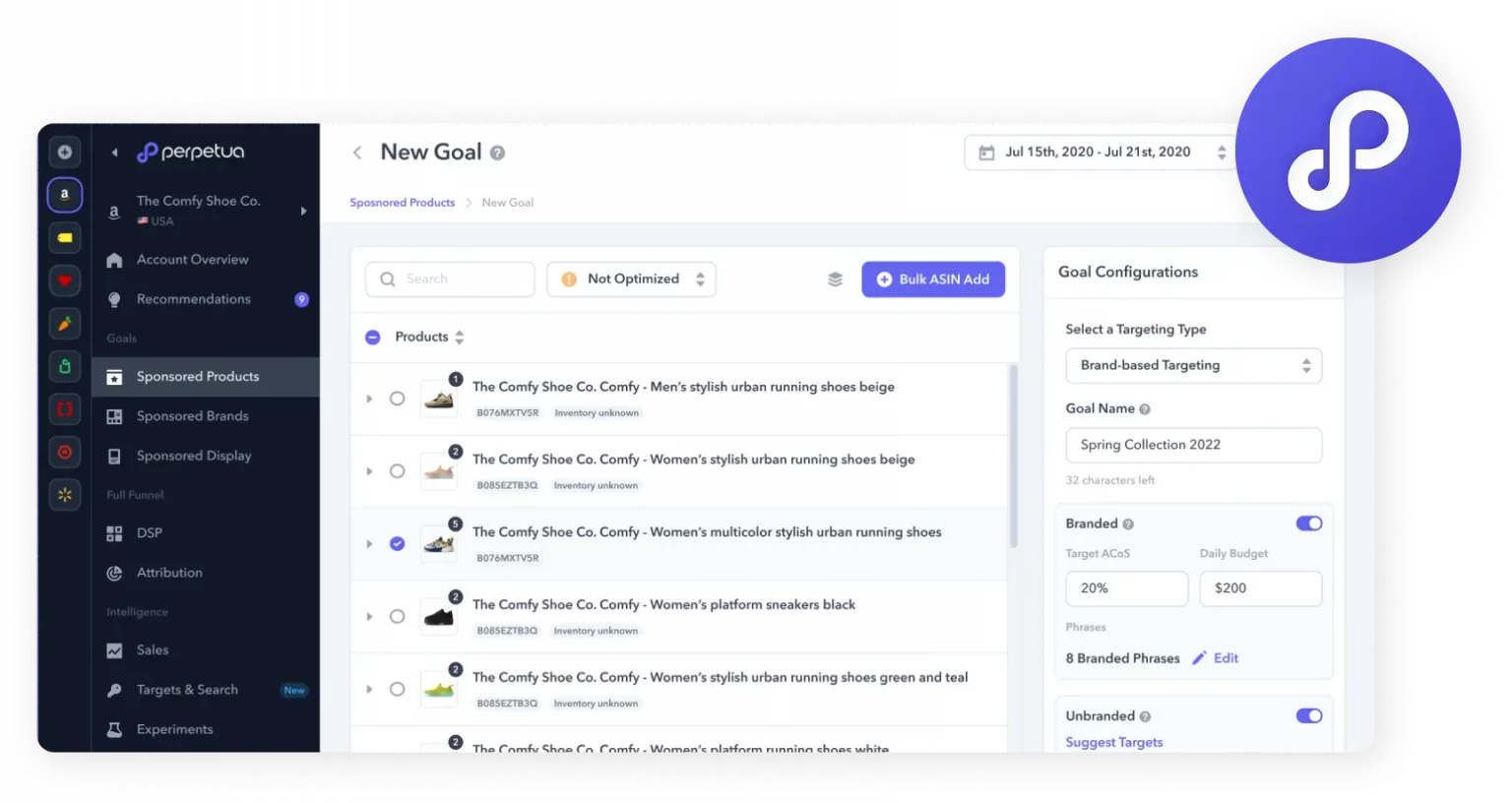
Pick it if you’re already spending heavily on Amazon Ads and want organic rank in the same view as the campaigns moving it. Skip it if you just want to know where your keywords sit, because you’d be buying an ad platform to read one report.
What about the free tools?
Free Chrome extensions check index status and rank on demand, and they’re genuinely useful for spot checks. AMZDataStudio’s is one of the better known.
The limitation is structural rather than a knock on quality. An on-demand checker tells you where you are right now, on the days you remember to look, which means it builds no history and can’t show you that a keyword slid three weeks ago. It says nothing while you sleep.
Free tools answer “where am I?”. Paid trackers answer “what changed?”.
How to choose
- You only want rank tracking. SellerSonar, which for the price of a bare tracker also puts hijacker, Buy Box and listing-change alerts in the same feed as your rank movements.
- You need to find keywords, not just track them. Helium 10 if the budget allows. Jungle Scout if it doesn’t.
- You’re running PPC alongside organic. SellerApp, and you can start on the free tier to see whether the combined view is worth anything to you before you pay.
- You spend heavily on Amazon Ads. Perpetua, for organic rank sitting next to the campaigns moving it. Budget accordingly.
- You’re not sure yet. Start where it costs nothing: AMZScout, SellerApp and SellerSonar all let you test without handing over a card.
💡 Expert Tip: Track fewer keywords than your plan allows. Twenty keywords per ASIN that you actually review beats two thousand you never open, and every tool here prices on a ceiling most sellers never reach.
Bottom line
Rank tracking is cheap. According to the vendor pricing pages linked above, every tool here except Perpetua starts under $100/mo, and three start under $30.
What separates them is what happens around the number. A dedicated tracker records it well. A research suite helps you pick better keywords to track. A monitoring tool tells you the moment the number moves, which is the version that matters if you are not checking dashboards daily.
Final Expert Recommendations:
Work out which question you’re answering before you pay for anything. Is it “which keywords should I target”? Buy research depth. Is it “did anything change on my listing today”? Then what you actually need is alerting, and most sellers who end up disappointed by a rank tracker bought the first kind when the second was the thing keeping them up at night.
Want rank changes to find you instead of the other way round? Start a free 14-day SellerSonar trial and track 5 ASINs and 10 keywords, no credit card required.

