






Quick Answer
An Amazon review trader site is a platform where sellers offer heavily discounted products to shoppers who then leave reviews. Most of them no longer exist. Of the 8 platforms the top-ranking guides still recommend, we found 5 offline in October 2026, 1 turned into a Kindle marketing service, and 1 quietly switched to cashback deals. Only Vipon is clearly still running.
- Why they died: Amazon banned incentivized reviews in 2016, and the FTC’s 2024 rule made paying for reviews a civil-penalty offense.
- The risk: compensation for a review, including a free or discounted product, can cost you your selling account.
- What works: Amazon Vine, the Request a Review button, and automated review requests.
Here’s the thing about every “best Amazon review trader sites” list you’ll find, including the one this page used to be: almost none of the sites on them are still in business.
I went through all of them in October 2026. Typed the domains in, checked the DNS records, loaded the pages.
Five of the eight that the top-ranking guides recommend are gone. One redirects to a Kindle book marketing service. Another now sells cashback codes and doesn’t mention reviews anywhere on its homepage.
That’s not an accident, and it’s not a coincidence either. The Amazon review trader model was built on something that is now explicitly illegal in the US, and the businesses went down with it. This page covers which ones survived, why the rest didn’t, and what a seller should do instead.
About the Author: Gloria Anderson writes for the SellerSonar editorial team on reviews, ratings, and listing health. She has spent more time than she’d like checking whether Amazon tools still work, and has developed strong opinions about guides that don’t.
Which Amazon review trader sites still work?
Checked on October 2, 2026, by DNS lookup and direct request. No guesswork, no “seems inactive.”
| Site | Status | What we found |
|---|---|---|
| Vipon | Running | Server up, behind bot protection |
| Snagshout | Running, but changed | Now cashback and discount codes; no review offer |
| AMZ RC | Gone | Redirects to KDPKIT, a Kindle marketing service |
| Rebaid | Gone | No DNS record at all; the domain is dead |
| DealGoGoGo | Gone | Domain resolves, server never answers |
| iReviewHome | Gone | Domain resolves, server never answers |
| VIP Power Club | Gone | No DNS record |
| Jump Send | Gone | Folded into Jungle Scout years ago |
A note on what “no DNS record” means, because it’s the strongest signal in that table. A site that’s merely down still has an address; it just isn’t answering. Rebaid and VIP Power Club don’t have an address any more. Nobody is paying for the domain to point anywhere.
Gone.
Vipon (formerly AMZReviewTrader)
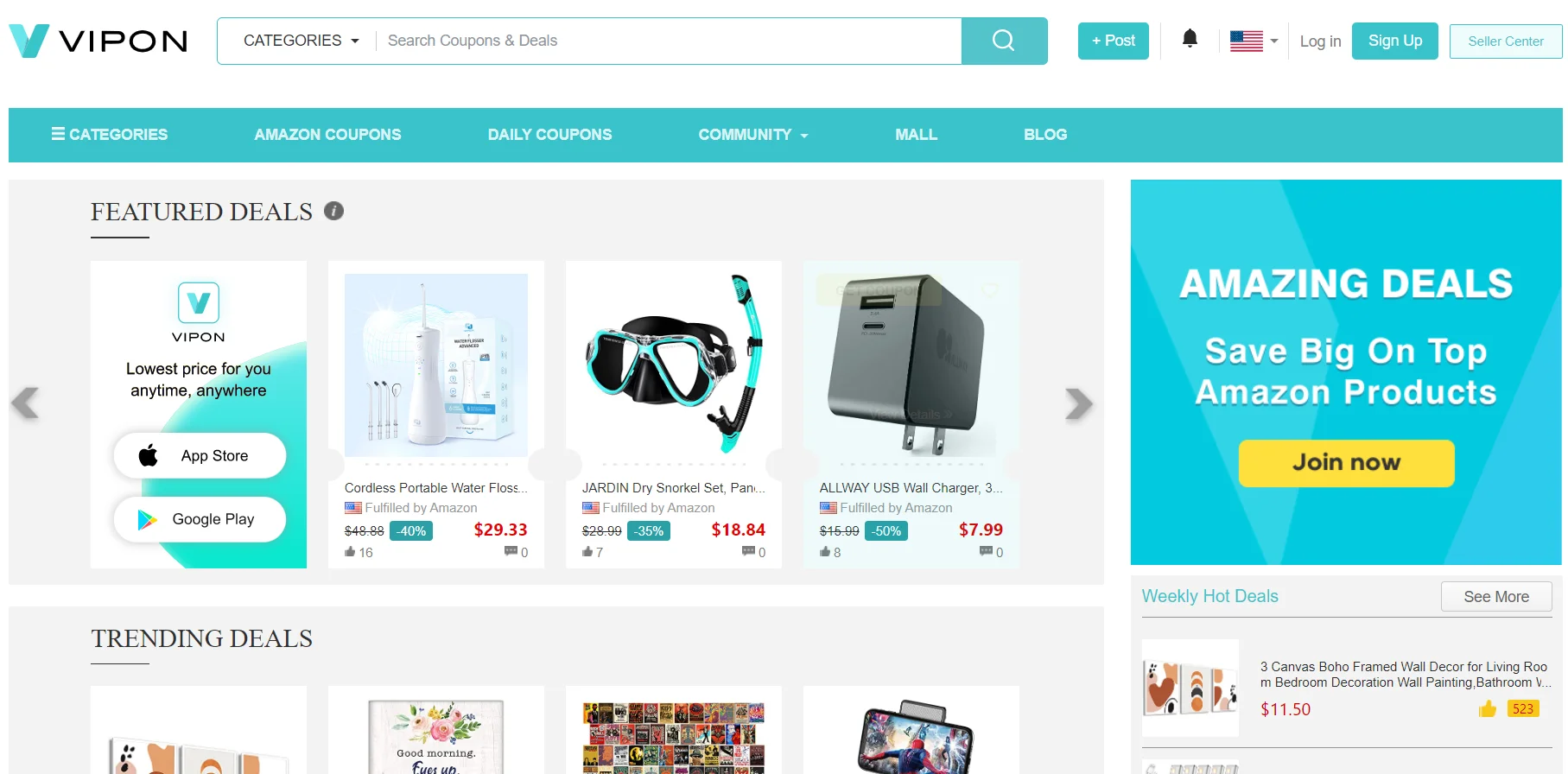
The oldest name in this category and the only one still clearly operating. It started life as AMZReviewTrader, which is why you’ll still see that name in older articles and in the occasional Google result.
I’d stop short of describing what it currently offers. The site sits behind bot protection that blocked every attempt to read it, so anything I told you about its discount tiers or request limits would be copied from someone else’s 2022 article. Which is exactly how the rest of this page got wrong for four years.
Go and look at Vipon yourself if you’re curious. Then read the two sections below before you sign up for anything.
Rebaid
Dead. Not “hard to reach” or “seems to be having problems.” The domain has no A record, which means there is no server anywhere for a browser to connect to.
This page used to describe Rebaid as a newer platform with strong Trustpilot scores and millions paid out in rebates. All of that may well have been true in 2022. None of it helps you now.
DealGoGoGo
Also gone. The domain still resolves to an IP address on Alibaba Cloud, but nothing answers on either port. That pattern usually means the DNS was set up once and the hosting lapsed later.
Worth knowing because WisePPC’s “Top 7 Best Amazon Review Trader Sites”, which ranks on page one and was updated in April 2026, still lists it. So does their entry for the next one.
iReviewHome
Gone, same pattern: a domain that resolves and a server that doesn’t respond. The old link on this page pointed to it over plain http://, without encryption, which should have been a warning sign on its own.
AMZ RC
This one is more interesting than a plain shutdown. The domain still works, but it now redirects to KDPKIT, which markets Kindle books for self-publishing authors. Different product, different audience, no review trading anywhere on it.
So if you follow an old link expecting an Amazon review service, you land on a book launch platform instead. The name survived. The business didn’t.
What a review trader site actually did
Worth understanding, because the model explains the extinction.
The mechanics were simple:
- A seller listed a product on the trader platform at a steep discount, sometimes free.
- Shoppers browsed those deals and requested the ones they wanted.
- The seller approved or declined each request, which is how they screened for likely reviewers.
- The shopper bought the item on Amazon at the discounted price, then left a review.
The sites were always careful to say the review wasn’t mandatory. In practice everyone understood the arrangement, which is the part that eventually mattered.
Why the category collapsed
Two things happened, eight years apart, and the second one was fatal.
Amazon’s 2016 rule change
On October 3, 2016, Amazon changed its Community Guidelines to eliminate incentivized reviews, with one exception: its own Vine program. Before that, a reviewer could accept a free or discounted product and post a review as long as they disclosed it. After that, they couldn’t, and Amazon deleted the previously disclosed incentivized reviews in bulk. TechCrunch covered the change the day it was announced.
Amazon’s current position hasn’t softened. Its Community Guidelines prohibit customers from “creating, editing, or removing a review in exchange for compensation, including payments, refunds, discounts, products, gift cards, warranties, or services”, and spell out that this “applies even if a seller offers a refund to remove or change a negative review”.
The consequences are listed just as plainly. Amazon may remove the content, limit the account’s use of community features, suspend or terminate the account, or withhold payments. For violations of state and federal law, including the FTC Act, it says it “might take legal action”, which “may result in civil and criminal penalties”.
Plenty of trader sites survived 2016 anyway. They restructured, dropped the explicit review requirement, and carried on selling deep discounts to shoppers who tended to leave reviews regardless. A wink and a nod, basically.
The FTC rule that finished it
The wink stopped working in 2024.
On August 14, 2024, the FTC announced a final rule banning fake reviews and testimonials. Among the practices it prohibits: “providing compensation or other incentives conditioned on the writing of consumer reviews expressing a particular sentiment, either positive or negative.”
That sentence describes the review trader business model almost word for word. And the rule gives the FTC something it didn’t have before, which is the power to seek civil penalties against knowing violators. Not a cease and desist. Money.
Look at the dates in that status table again. A category that had been limping along since 2016 mostly stopped existing in the two years after a federal regulator made it a finable offense. I don’t think that’s a coincidence.
💡 Expert Tip: If a service tells you its model is “Amazon compliant” because the review isn’t technically required, ask who carries the risk when Amazon disagrees. It isn’t the service. Your selling account is the thing on the line, and Amazon doesn’t ask the platform for its side of the story.
Can you get paid to review Amazon products?
A fair number of people reading this page aren’t sellers at all. They’re here because they searched something like “how to become an Amazon reviewer,” and Google sent them to an article about trader sites.
So, briefly, and honestly: no, not in any way that is both legal and worth your time. Being paid for a review expressing a particular sentiment is now prohibited by federal rule, and accepting a free product for a review violates Amazon’s guidelines and gets your reviews removed.
The one legitimate route is Amazon Vine, and you can’t apply to it. Amazon invites reviewers based on how helpful their existing reviews have been. Write good reviews of things you actually bought, and you might get asked. That’s the whole mechanism.
What works instead
Three approaches, all of them boring, all of them legal.
Amazon Vine
Vine is Amazon running the incentivized review program itself, with the controls that the trader sites never had. Amazon picks the reviewers, not you.
The current terms:
- Your product needs fewer than 30 reviews on its detail page to enroll.
- You can offer up to 30 units.
- Fees, per Amazon’s Vine program page: free up to 2 units, $75 for 3 to 10, $200 for 11 to 30.
- You aren’t charged until 30 days after enrollment and after your first review publishes, and not at all if no Vine review arrives within 90 days.
If your product belongs to a brand, that brand has to be in Brand Registry, though generic products can enroll without it. New sellers who enroll a brand in Brand Registry get a $200 Vine credit, which covers a full 30-unit enrollment. Our guide to the Amazon Vine program goes through the enrollment side in more detail.
One caution from experience: Vine reviewers are candid on purpose. A launch can pick up several critical reviews in a fortnight, before you have any organic ones to balance them.
Free, built into Seller Central, and underused. It sends Amazon’s own templated review request to a buyer, which means no policy risk at all because Amazon writes the message.
The catch is that it’s one click per order, which stops being realistic somewhere around your fiftieth order a week.
Automated review requests
Which is where request automation earns its keep: same compliant message, sent on a schedule, across every order.
If you want an alternative to the review trader sites that won’t put your account at risk, look at SageMailer.
It sends automated review and seller feedback requests to customers who have already received their order. Nothing is offered in exchange, which is the whole point: you’re asking, not paying. Proactive asking raises the share of buyers who leave a review and tends to reduce the proportion that are negative, because happy customers are the ones who need prompting.
The requests go out automatically rather than one at a time. You pick a template or build one in the editor, attach it to a campaign, and it sends to buyers who have already received the item. Campaign status sits on a single dashboard, so you can see what went out and what came back.
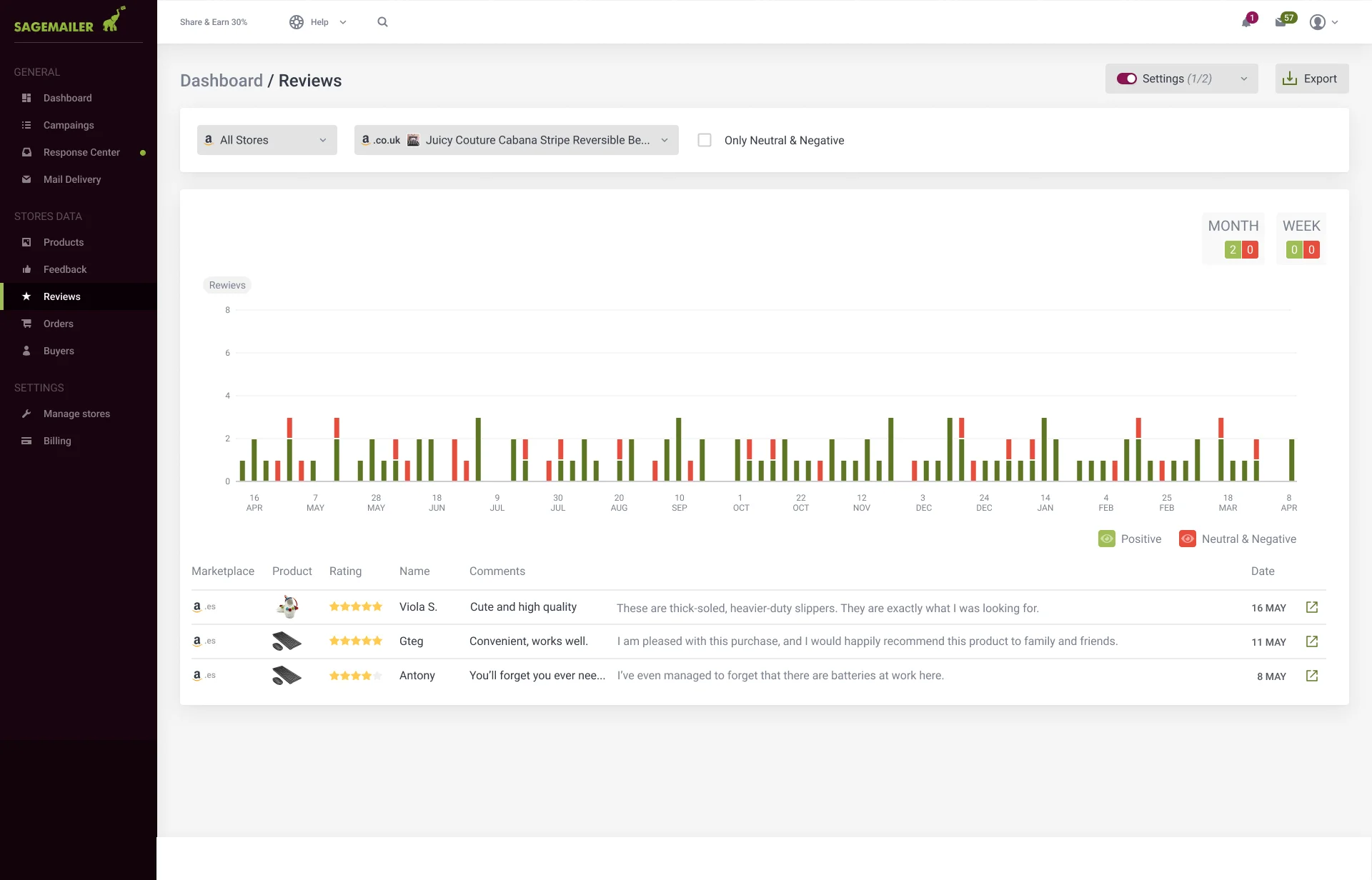
Templates accept HTML, call-to-action buttons, images and styling, so a review request can look like the rest of your brand instead of a plain-text nudge. SageMailer also watches seller feedback and product reviews across your ASINs, and can be set to notify you about negative and neutral feedback only.
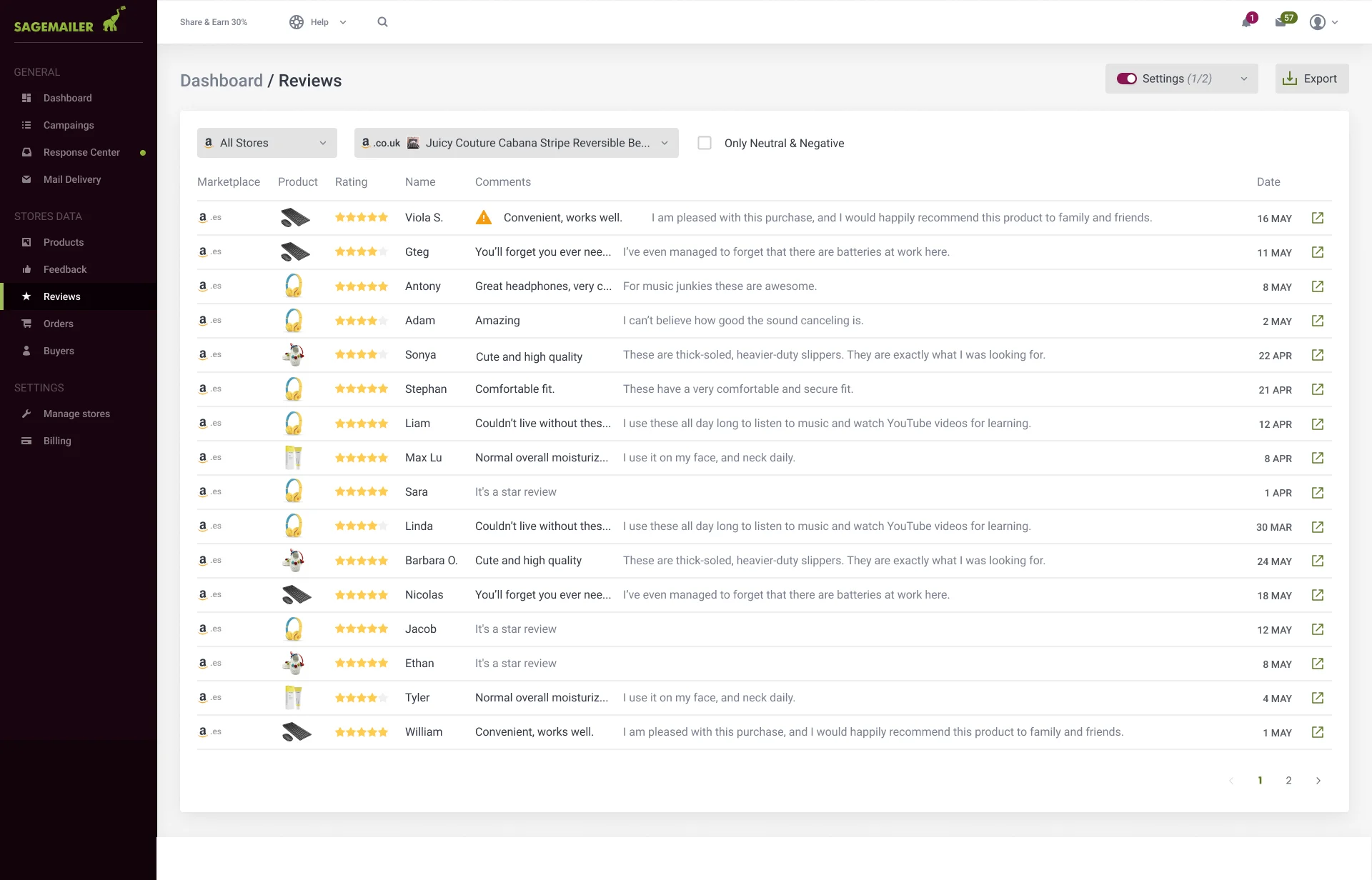
SageMailer’s own guide to getting reviews on Amazon walks through the method, or you can open a SageMailer account and set up a first campaign.
None of this is a shortcut, and I’d rather be straight about that. You’re asking politely, at scale, and some share of buyers says yes. That’s the entire lever. It’s also the only one that doesn’t put the account at risk, which is worth more than it sounds.
🎯 Pro Insight: Run Vine and automated requests at different moments, not together. Vine belongs in the launch window, when you have fewer than 30 reviews and nothing to balance a bad one. Request automation belongs afterwards, when you have steady order volume and the law of averages works in your favor.
How to spot a review service that will cost you your account
The trader sites are mostly gone, but the offers haven’t stopped. They’ve moved to Facebook groups, WhatsApp, and cold email. Amazon publishes its own list of what to report, and these four signals line up with it. Any one of them is enough:
- Anything of value changes hands in exchange for a review. Money, a free product, a refund after purchase, a gift card. Amazon’s definition of compensation is deliberately wide.
- The review’s sentiment is specified. “Positive reviews only” is the exact language the FTC rule names.
- Contact happens off Amazon. A service asking buyers to message on WhatsApp for a rebate is routing around Buyer-Seller Messaging precisely so Amazon can’t see it.
- Reviews arrive in a burst. Forty five-star reviews in a week on a product selling six units a day is the pattern Amazon’s own detection is built to catch.
If you want to check whether something already happened to your listing, our breakdown of how Amazon review checkers work covers the tools that analyze review patterns, and what they genuinely can and can’t tell you.
Where to start
The honest summary: the thing this page used to recommend barely exists any more, and the reason it stopped existing is the same reason you shouldn’t go looking for a replacement.
If you’re launching and sitting below 30 reviews, enroll in Vine. If you have order volume, turn on automated review requests and leave them running. Then watch what arrives, because reviews change after they’re posted and nobody tells you when they do. Our guide to Amazon review monitoring covers that side.
📌 From Our Experience: The sellers who end up with review problems are rarely the ones who went looking for a shortcut. They’re the ones who inherited a listing, or hired an agency that used a service without telling them. If you took over an account, pull the review history before you do anything else.
Final Expert Recommendations: Based on what we see with sellers, the most useful habit here is skepticism about dates. Any list of Amazon tools older than a year is probably recommending something that no longer exists, and this page was proof of that for four years. Before you sign up for a service any article recommends, including this one, open the site and check it’s still there. It takes 10 seconds and it would have saved a lot of people a lot of time.
Want to know the moment a review lands, changes, or disappears? SellerSonar review monitoring tracks ratings, sentiment, and competitor reviews, with a 14-day free trial and no card required.

